 SOVATA
Voorna: Rebuilding Online Voting as a Secure, Scalable SaaS Platform

Voorna at a glance — an interactive 3D map
The core platform, the capabilities that make it work today, and the AI opportunities its architecture is ready for — as one connected graph. Drag to rotate and explore.
- Voorna
- Voting experience
- Contestant management
- Integrated payments
- Admin dashboard
- Live results
- Cloud platform
- Fraud detection
- Event assistant
- Event summaries
- Predictive analytics
- NL admin search
Voorna is a secure online voting platform, designed and built by Sovata, that lets organisations run professional digital voting events — pageants, awards, competitions, school and community campaigns — without spreadsheets, manual counting or fragmented payment tools. Sovata took Voorna from concept to a working, mobile-first SaaS product: a branded voting experience for participants, an administration dashboard for organisers, integrated payments for free and paid voting, and a platform architecture deliberately shaped so AI-powered administration and analytics can be layered on next.
The short version
Public voting still runs, in far too many places, on tools that were never built for it — a shared spreadsheet, a manual tally, a payment link pasted into a social post, and an organiser staying up late to reconcile the numbers. The result is slow, error-prone and, worst of all, hard for participants to trust. Voorna was built to replace that with a single, secure platform where an organiser can create an event, add contestants, open free or paid voting, and watch results update in real time — all from a phone.
Sovata approached Voorna the way we approach an enterprise product: business model first, user experience second, technology in service of both. We designed the information architecture around the two people who matter — the voter, who needs to vote in seconds, and the organiser, who needs to run an event with confidence — then built a scalable cloud platform beneath them. The strategic outcome is not a single-use website. It is a reusable SaaS foundation that already serves multiple event categories and is architected to become an AI-assisted product without a rebuild.
What Voorna is, and why it exists
Voorna exists because the market it serves has been under-served by design. Pageants, community awards and competitions are often run by small teams or volunteers with real production values but little software budget. The tools built for enterprise polling are too heavy and too expensive; the free tools are insecure and off-brand. Voorna sits deliberately in the gap: professional enough to be trusted with paid voting and public reputations, simple enough that a first-time organiser can launch an event without training.
The market opportunity is broader than pageants, and that shaped the build from day one. The same core — contestants, a voting campaign, secure vote capture, payments and live results — describes an awards night, a school talent quest, a charity fundraiser, a sporting club’s player of the year and a corporate recognition programme. By designing the domain model to be event-agnostic rather than pageant-specific, Voorna turned a single vertical into a horizontal platform with recurring SaaS revenue and a genuinely global addressable market.
The business value is threefold. For organisers, Voorna removes administrative load and the reputational risk of a voting dispute. For participants and voters, it provides a fast, trustworthy, mobile experience. For the platform itself, free events drive adoption while paid voting and premium events create a clear, scalable revenue model — the economics of good SaaS.
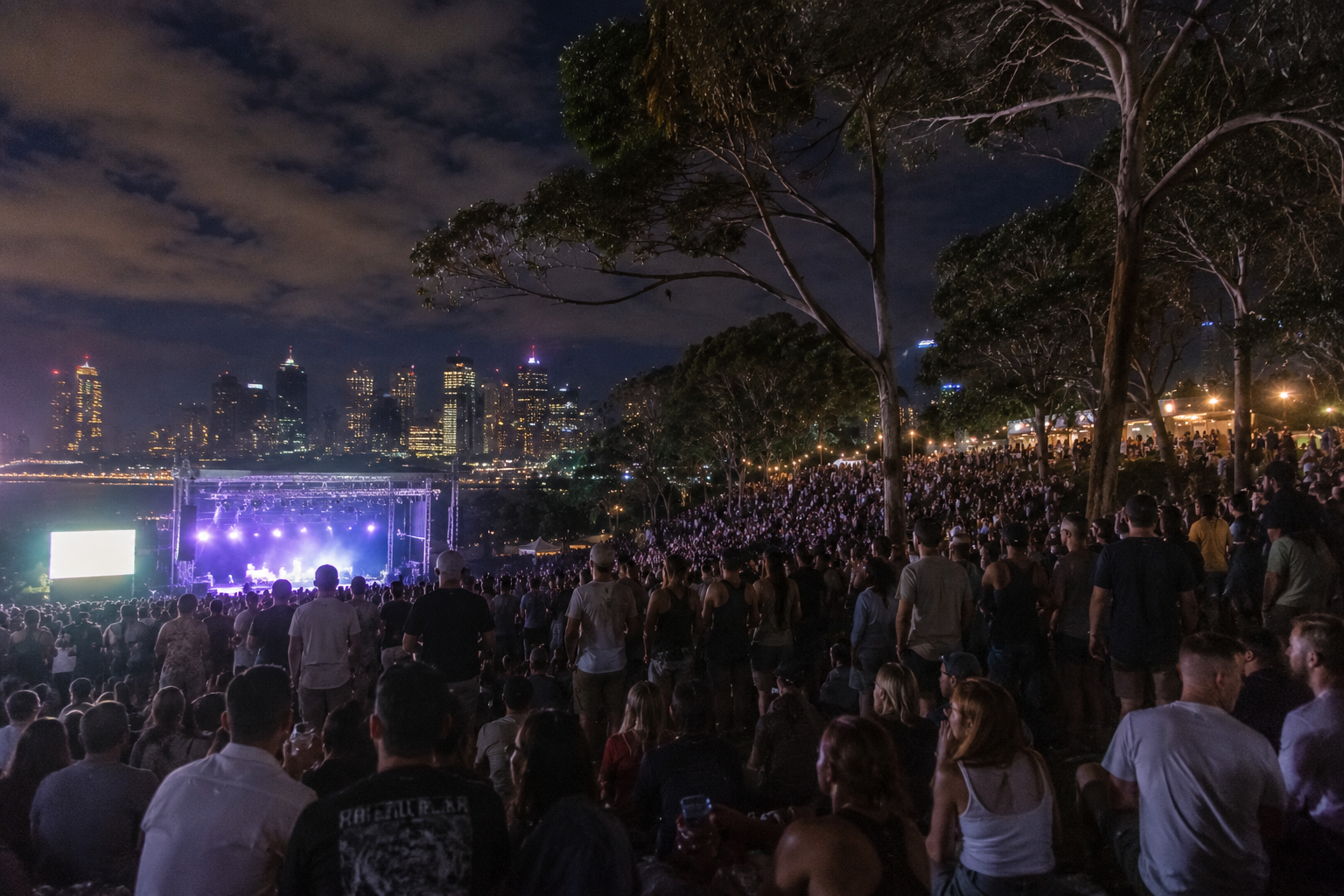
What was actually broken about online voting
Traditional voting workflows fail in predictable, compounding ways. The problems are not exotic — they are the everyday friction of running an event on tools that were never meant to carry it.
Manual administration
Contestants tracked in one place, votes in another, payments in a third. Every event is rebuilt from scratch, and every reconciliation is done by hand.
Business benefit — Voorna consolidates the entire event into one system of record.Fragmented payments
Paid voting is bolted on with generic payment links, leaving organisers to match transactions to votes manually and voters unsure their payment counted.
Business benefit — Integrated payments tie each paid vote to a confirmed transaction.Weak trust and integrity
Without safeguards against duplicate or fraudulent voting, results can be questioned — and in a public contest, a disputed result is a reputational failure.
Business benefit — Vote integrity is designed in, not patched on.Poor mobile experience
Most voting happens on a phone, shared through social media, yet many legacy tools were built desktop-first and feel broken on mobile.
Business benefit — A mobile-first experience meets voters where they already are.No real-time visibility
Organisers cannot see how an event is tracking without exporting and re-counting, so they run blind until the close.
Business benefit — A live leaderboard turns the event into something organisers can actually manage.No path to scale
A bespoke site or spreadsheet serves one event and then is thrown away — there is no platform, no reuse and no growth.
Business benefit — A multi-tenant SaaS architecture serves every future event.Underneath these operational pain points sits a growth and scalability problem. The organisations running these events would happily pay for a better tool, but nothing existed that was affordable, trustworthy and reusable across event types. That is a digital transformation opportunity hiding in plain sight: not a marginal improvement to an existing product category, but the chance to define what professional online voting should look like.
How we framed the problem before building
Discovery focused on the two user roles that define the product, because their needs pull in opposite directions and the platform has to satisfy both. We framed the problem before writing any code, in four moves.
- 01
Understand the two users
Voters want to arrive, understand what they are voting on, cast a vote — sometimes a paid one — and leave in under a minute, usually on a phone. Organisers want the opposite of speed: control, visibility and confidence the result will stand up to scrutiny. We designed for both.
- 02
Map the competitive gap
Enterprise polling tools were too heavy and expensive; free poll builders offered no branding, no payments and no protection against duplicate voting. Nothing occupied the middle. Voorna was positioned squarely there: branded, payment-enabled and trustworthy enough for a public result.
- 03
Map the customer journey
We targeted the moments that make or break the product — the voter’s first screen after opening a shared link, and the organiser’s event setup and close — and designed against those specific moments rather than an average no real user experiences.
- 04
Map the AI opportunities
We identified where AI would create real value later — fraud and duplicate-vote detection, event summaries, organiser analytics, support — and made structural decisions early, so those capabilities could be added as the product matures rather than retrofitted under pressure.
The strategic decisions that shaped Voorna
Every meaningful product decision on Voorna traces back to a small number of strategic choices. Naming them matters, because they explain why the product looks and behaves the way it does.
Platform, not project
We modelled the domain generically — event, contestants, campaign, votes, payments — instead of hard-coding pageant concepts. The decision cost a little more upfront and turned Voorna into a multi-industry platform rather than a single-vertical tool, so one codebase now serves pageants, awards, schools and corporate voting.
Mobile-first, non-negotiable
Because voting is shared and consumed on phones, the mobile experience is the product, not a smaller version of it. Desktop is the adaptation, not the baseline — so the experience is fastest exactly where most votes are cast.
A free-to-paid revenue model
Free events remove the barrier to adoption and seed the platform; paid voting and premium events convert that adoption into recurring revenue. Growth and monetisation reinforce each other instead of competing.
Trust as a feature
In public voting, integrity is the product. We treated vote integrity and transparent payments as first-class requirements rather than compliance afterthoughts, so an organiser can defend a Voorna result in public.
AI-ready by architecture
A clean, well-structured data model and a modern cloud stack mean AI capabilities can be added as services against existing data — no rebuild required. Tomorrow’s AI roadmap does not threaten today’s codebase.
Designing for two very different users
The central design tension in Voorna is that the voter and the organiser want almost opposite things, and both journeys share the same platform. Our answer was to design two distinct experiences over one coherent system, rather than compromising on a single interface that served neither well.
The voting experience
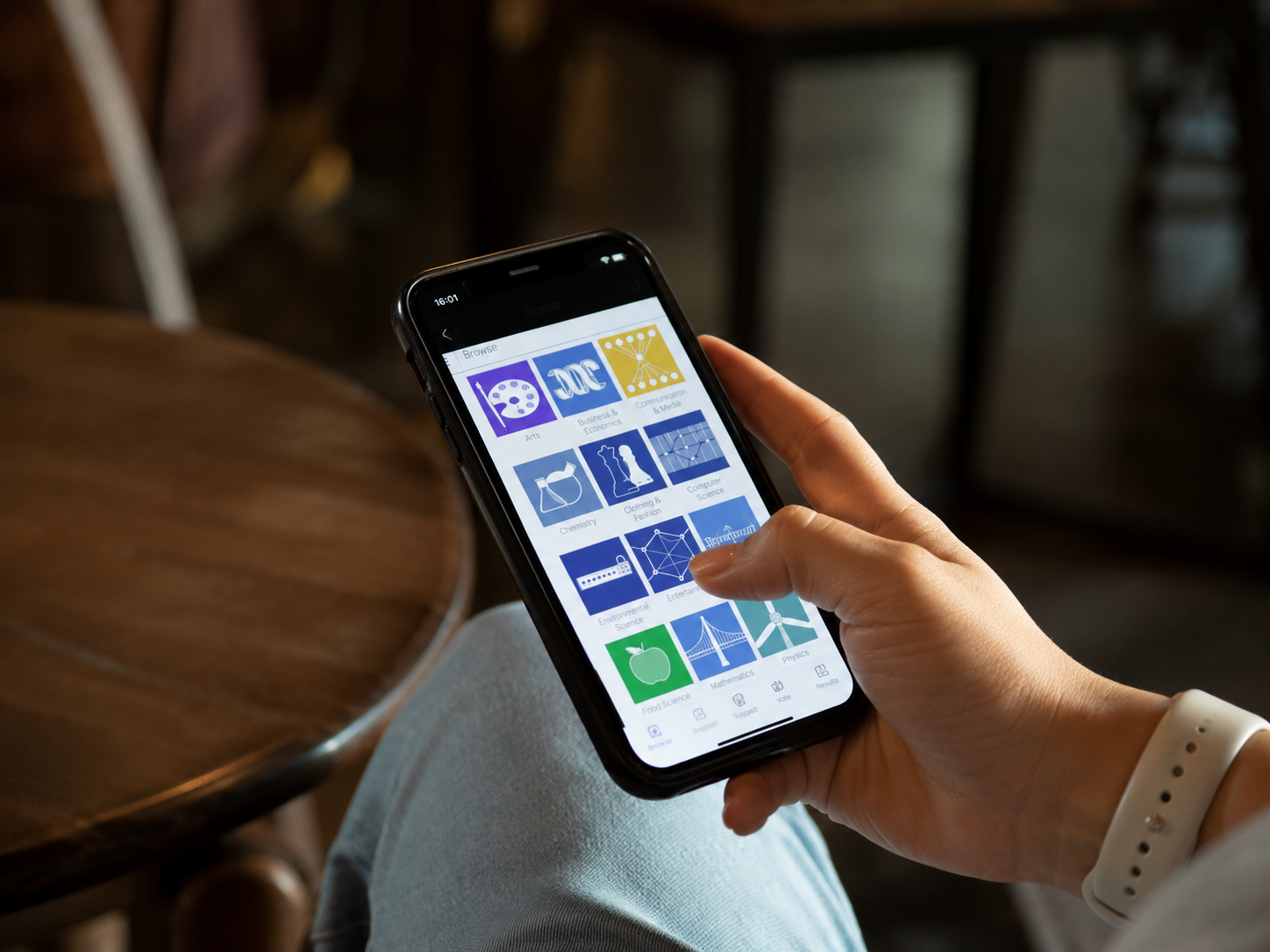
The voter-facing experience is engineered for near-zero friction. A shared link opens a branded event page that establishes context immediately: what the event is, who the contestants are, and how to vote. Contestant profiles carry photos, short bios and social links so voters can recognise who they are supporting. Casting a vote — free or paid — takes a couple of taps, and the payment flow for paid voting is kept transparent and reassuring so voters are never left wondering whether their vote counted. Visual hierarchy does the heavy lifting: the vote action is always the clearest thing on the screen.
The organiser experience
The organiser experience inverts those priorities toward control and clarity. Onboarding is designed so a first-time, non-technical organiser can create an event, add contestants and configure voting without a manual. The administration dashboard gives a real-time view of the event — vote counts, a live leaderboard and event status — turning a previously blind process into something an organiser can actively manage. Every screen answers the organiser’s underlying question: is my event running correctly, and can I trust the numbers?
Information architecture, interaction and accessibility
The information architecture mirrors the mental model of running an event: an event contains contestants; a campaign governs how and when voting happens; votes and payments are the record of what occurred. Because that structure matches how organisers already think, navigation feels obvious rather than learned. Interaction design favours immediate, legible feedback — a vote registers visibly, a payment confirms clearly, the leaderboard moves. Accessibility was treated as baseline quality: sufficient colour contrast, clear focus states, legible type and touch targets sized for real thumbs on real phones. A consistent design system keeps the branded event pages coherent while still letting each organiser’s event feel like their own.
What we built
Voorna is best understood as three connected experiences over one scalable platform.
Product experience
Branded, mobile-first event pages where the public discovers contestants and votes in seconds — the surface most people see.
Customer experience
Free and paid voting with an integrated, transparent payment flow, so organisers can monetise without sending voters to a disjointed third-party checkout.
Admin experience
An organiser dashboard for creating events, managing contestants and running campaigns, with real-time reporting and a live leaderboard.
Platform architecture
A multi-tenant cloud SaaS built on a modern stack, with a data model general enough to serve many event types and structured enough for AI to build on.
Why Voorna is ready for AI
Voorna does not depend on AI to deliver value today — and that was a deliberate strategic choice. A voting platform earns trust by being secure, fast and correct first. But the same clean data that makes Voorna reliable also makes it unusually well-positioned for AI, and every structural decision was taken with that in mind.
Because votes, contestants, events and payments live in a clean relational model, AI capabilities can be added as services over existing data rather than migrations that put the live product at risk. The highest-value opportunity is fraud and duplicate-vote detection — models that learn normal voting patterns and flag the anomalies rules alone miss — followed by a conversational event assistant, AI-generated event summaries, predictive analytics for organisers, natural-language admin search, and AI-assisted support and moderation. The Future opportunities below set these out in full.
This is exactly the kind of AI opportunity map Sovata builds for clients. We would approach each the way we approach any AI engagement: start with the business value and the data readiness, prove a narrow, high-value use case first, keep a human accountable for consequential decisions, and measure the result before scaling. The difference with Voorna is that we designed the foundation for that work from the beginning.
How Voorna was designed and built
- 01
Discovery & framing
Mapped the two users, the competitive gap, the customer journey and the AI opportunities before a line of code was written.
- 02
Product & interaction design
Designed two experiences over one system — a near-zero-friction voting flow and a control-first organiser dashboard — with a consistent design system, deliberate visual hierarchy and accessibility as baseline quality.
- 03
Build on a scalable stack
Built the platform on Next.js, React and TypeScript with Supabase, PostgreSQL and Stripe, so each feature lowers the cost of the next and the data model stays clean enough for AI.
- 04
Ship & harden
Delivered a working, multi-tenant SaaS product — not a proof of concept — with vote integrity and transparent payments treated as first-class requirements from day one.
The stack, and why each piece was chosen
The technology was chosen so that each decision lowers the cost of the next feature — and so AI can be added later as a service, without a rebuild. None of it is fashion for its own sake.
Next.js, React & TypeScript
A fast, type-safe front end. A strong type system reduces defects as the product grows and refactors stay safe.
Business benefit — Speed now, without paying for it in bugs later.Tailwind CSS
A consistent design system that keeps every branded event page coherent while still letting each organiser’s event feel like their own.
Business benefit — On-brand events without bespoke design each time.Supabase & PostgreSQL
A managed data, authentication and storage layer over a clean relational model that removes undifferentiated heavy lifting.
Business benefit — A data foundation structured for AI from day one.Stripe, Vercel & cloud
Integrated payments plus serverless, global, elastic delivery.
Business benefit — A viral event scales seamlessly — an opportunity, not an outage.What Sovata did on Voorna
Voorna is an end-to-end example of Sovata’s capability — strategy, design and delivery under one roof, which is a more honest demonstration of what we can build than a slide deck.
What the work produced
We describe Voorna’s outcomes as delivered capability — what now exists and what it enables — rather than borrowing metrics we cannot independently verify. That honesty is itself part of the Sovata standard.
Voorna at a glance
Secure online voting
Vote capture built for integrity, with safeguards against the duplicate and fraudulent voting that undermine public contests.
Business benefit — Results organisers can defend.Contestant management
Rich contestant profiles with photos, bios and social links, managed from one place.
Business benefit — Professional presentation without design work.Branded event pages
Each event gets its own polished, on-brand voting page at a shareable link.
Business benefit — Every organiser looks credible from the first tap.Integrated payments
Free and paid voting with a transparent, built-in payment flow tied to each vote.
Business benefit — Monetisation without reconciliation headaches.Admin dashboard
A control centre for creating events, managing contestants and running campaigns.
Business benefit — Run a whole event from one screen.Real-time reporting & leaderboard
Live vote counts and a leaderboard that update as votes arrive.
Business benefit — Visibility replaces guesswork.Responsive, multi-device design
A mobile-first experience that works across phones, tablets and desktops.
Business benefit — Nobody is turned away by a broken screen.Scalable architecture
A cloud platform that absorbs sudden spikes in voting traffic.
Business benefit — A viral event is an opportunity, not an outage.The business case behind the build
Voorna matters commercially because it converts a fragmented, low-trust activity into a repeatable, revenue-generating platform. The business impact is a genuine SaaS model: free events drive adoption, paid voting and premium events drive recurring revenue, and one codebase amortises across every future event and every new industry it enters. The competitive advantage is the position itself — professional enough to be trusted, simple enough to be self-served — which almost nothing else in the market occupies.
The customer impact is trust and time. Organisers reclaim the hours lost to manual administration and gain a result they can stand behind; voters get an experience that respects their time and their confidence. The operational efficiency compounds: every event runs on the same reliable rails instead of a new improvisation. And the return on the platform investment grows precisely because the architecture was built to scale and to accept AI — the next dollar of capability costs less than the last.
What Voorna taught us
The most valuable lesson from Voorna is that generalising a product one level early is one of the highest-return decisions a team can make. Building the domain model around "events" instead of "pageants" cost very little at the start and turned a single-vertical tool into a multi-industry platform. The discipline is knowing which abstraction pays for itself and which is speculative over-engineering — and that judgement is exactly what strategy work buys you.
The second lesson is that trust is a design problem before it is a technical one. In public voting, the perception of integrity matters as much as the mechanism, so transparent payment flows and visible, real-time results do as much for confidence as any back-end safeguard. The third is the one we apply to every engagement: earn the right to add AI. Voorna is more valuable because it works without AI today and is ready for AI tomorrow — foundations first, intelligence second.
Where Voorna goes from here
The roadmap builds outward from the same foundation, adding intelligence and reach without disturbing what already works.
Fraud & duplicate-vote detection
Models that learn normal voting patterns to flag coordinated voting, duplicate identities and suspicious velocity — the highest-value first AI move.
AI event assistant
A conversational assistant that helps organisers set up events, configure voting and answer “how do I…” questions in natural language.
AI summaries & reports
Automatic recaps and reports of turnout, results and standout moments, ready to share with sponsors and participants.
Predictive analytics
Forecasts of turnout and engagement, and insight into what drives participation, so each event runs better than the last.
Voice AI administration
Hands-free event administration, so an organiser can create and run an event by voice.
Enterprise, API & white-label
An enterprise dashboard for many events at once, API and CRM integrations, and a white-label platform so agencies and federations run Voorna under their own brand.
Frequently asked questions
Voorna is a secure online voting SaaS platform that lets organisations run professional digital voting for pageants, awards, competitions, schools, charities and corporate events. Organisers create a branded event, add contestants, open free or paid voting, and see results in real time — all from any device.
Voorna was designed and built by Sovata — showcasing our capability across AI strategy, product strategy, UX/UI design, software design and technical architecture, from concept through to a working platform.
It replaces the spreadsheets, manual vote counting, fragmented payments and off-brand websites that event organisers have traditionally cobbled together. Voorna consolidates contestants, voting, payments and reporting into one secure, mobile-first platform.
Primarily beauty pageants, award ceremonies and competitions, and secondarily schools, universities, community organisations, non-profits, sporting competitions and corporate awards — any organisation that needs trustworthy public voting.
Voorna supports both free and paid voting through an integrated, transparent payment flow, so each paid vote is tied to a confirmed transaction. Organisers avoid manually reconciling generic payment links against votes.
Yes — Voorna is mobile-first by design. Because voting is usually shared and cast on phones via social media, the mobile experience is the primary experience, with desktop and tablet as responsive adaptations.
Vote integrity was treated as a first-class requirement, with safeguards against duplicate and fraudulent voting, and the architecture is designed so AI-based fraud and anomaly detection can be added as the highest-value next capability.
Voorna uses a modern, scalable stack: Next.js, React and TypeScript on the front end, Tailwind CSS for the design system, Supabase and PostgreSQL for data and authentication, Stripe for payments, and Vercel and cloud infrastructure for global, elastic delivery.
AI is on the roadmap, not a dependency today. Planned opportunities include fraud and duplicate-vote detection, an AI event assistant, AI-generated event summaries, predictive analytics and natural-language admin search — all additive services over Voorna’s existing data model.
Yes. Voorna is a demonstration of the exact capability Sovata offers — from AI and product strategy through UX/UI design to full software delivery and AI-ready architecture. Book a discovery call to talk through your product.
Want a product like this for your organisation?
Voorna and Luniby Farm are proof of what Sovata designs and ships. Book a free discovery call and tell us what you’re trying to build.